Within Interviews
How a Newspaper Profile Changed Public Perception
The Guardian profile helped frame McKinnon as an ordinary person facing extraordinary legal pressure.
On this page
- The human interest framing
- Balancing allegations and personality
- Influence on later coverage
Page outline Jump by section
Introduction
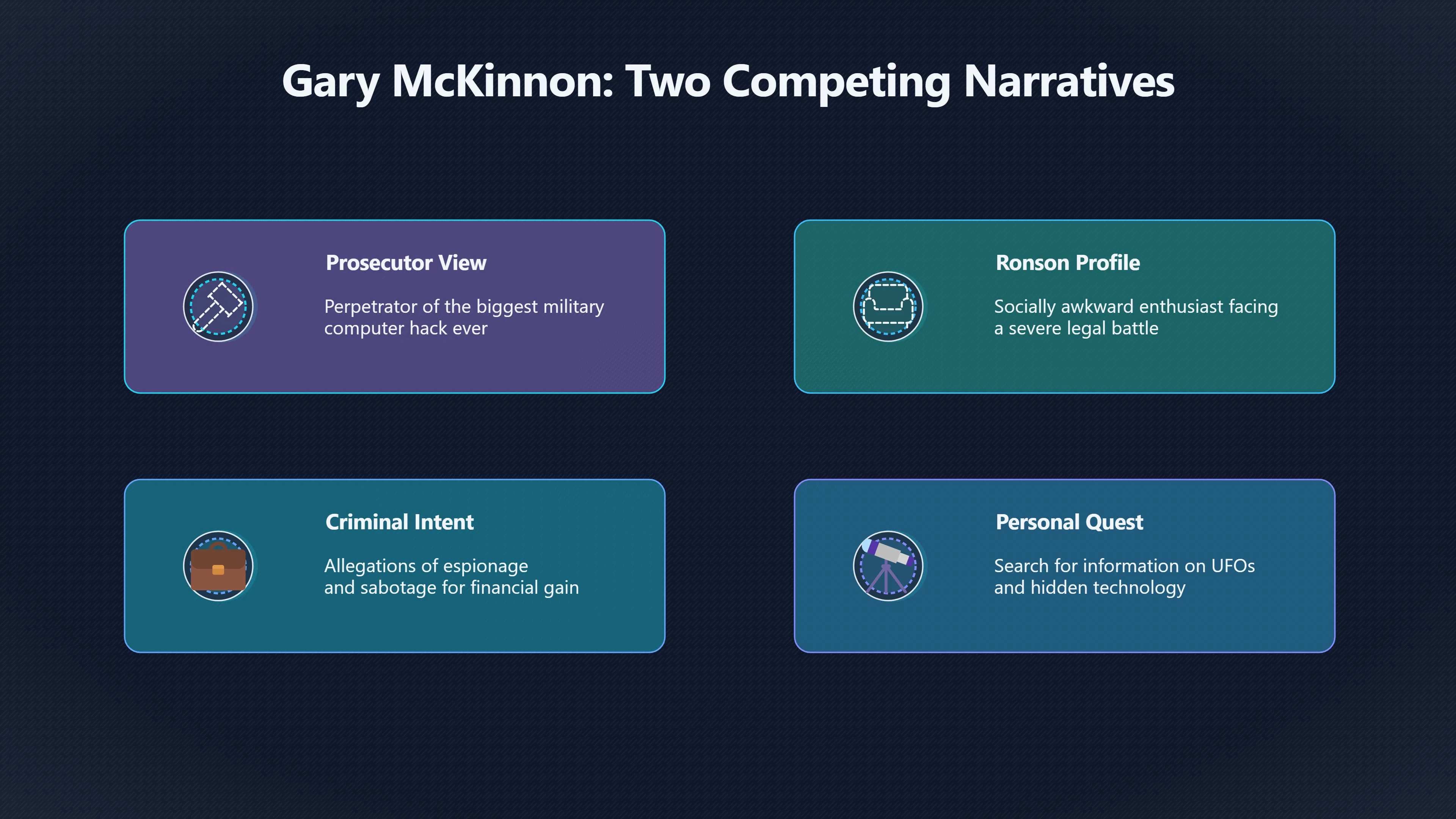
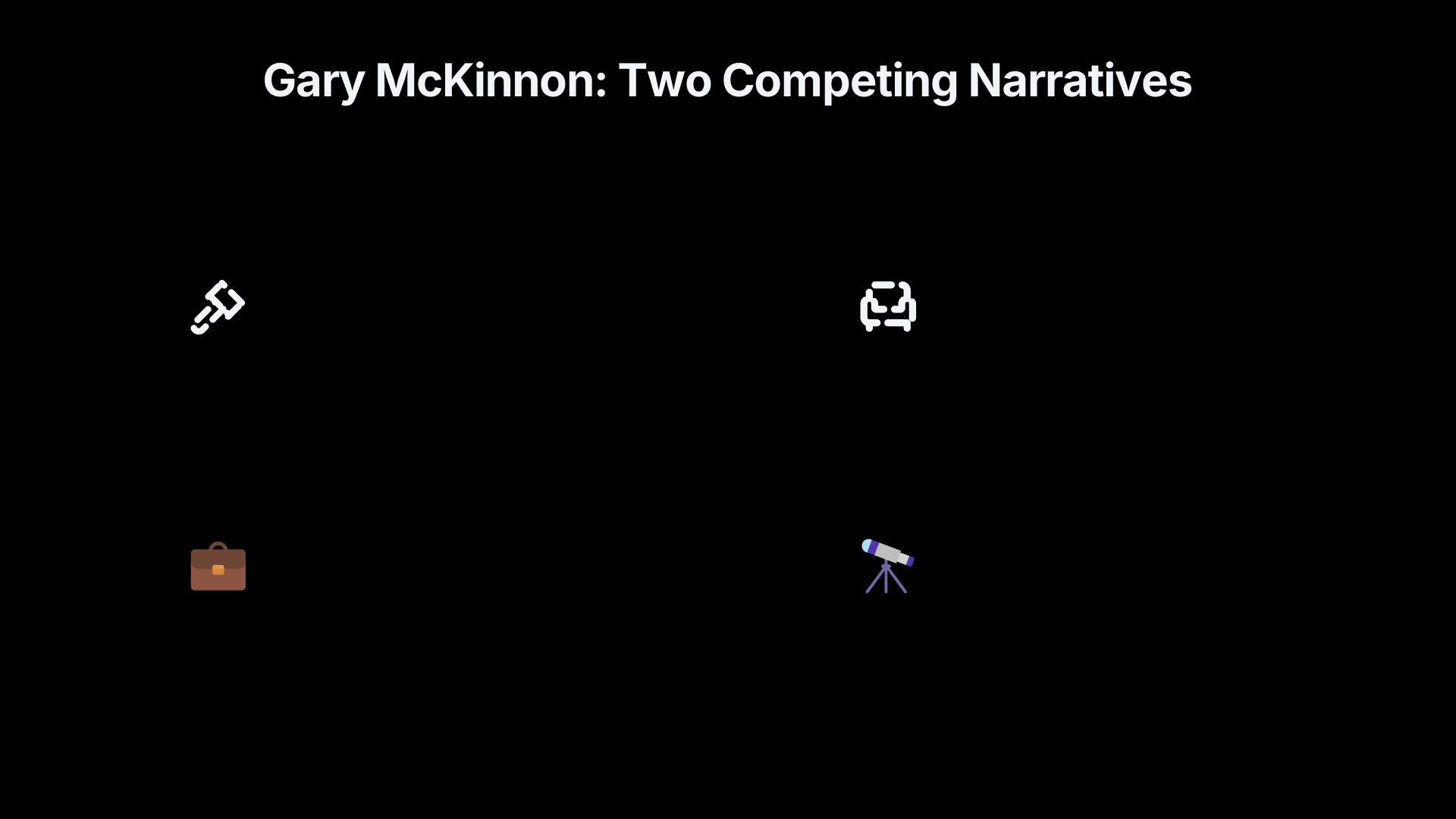
Among the many interviews that helped shape Gary McKinnon’s public image, Jon Ronson’s 2005 profile in The Guardian was one of the most influential. At a time when US prosecutors were describing McKinnon as the perpetrator of the “biggest military computer hack of all time”, Ronson presented a very different picture: a socially awkward, UFO-obsessed computer enthusiast facing the possibility of extradition and a severe prison sentence. The article did not absolve McKinnon of responsibility, but it reframed him as a recognisable human being rather than a distant cyber-villain. That shift proved important because public attitudes toward the case were still forming, and media narratives often shape sympathy long before courts reach their final conclusions.[The Guardian]theguardian.comThe Guardian Game over | Gary Mc KinnonThe GuardianGame over | Gary McKinnonJuly 9, 2005 — 9 Jul 2005 — Gary McKinnon has been accused of committing the 'biggest military compu…
The Human-Interest Framing
Ronson’s profile, published as “Game Over” in The Guardian, focused heavily on McKinnon’s personality, motivations and everyday life. Instead of opening with technical details of network intrusions, the article introduced readers to a man whose interests included UFOs, conspiracy theories and computers, and who appeared ill-equipped for the enormous legal battle ahead of him.[The Guardian]theguardian.comThe Guardian Game over | Gary Mc KinnonThe GuardianGame over | Gary McKinnonJuly 9, 2005 — 9 Jul 2005 — Gary McKinnon has been accused of committing the 'biggest military compu…
This approach mattered because public understanding of cybercrime was still relatively limited in the mid-2000s. Many readers were more likely to connect emotionally with an individual story than with discussions of network security or military systems. By depicting McKinnon in domestic and personal terms, Ronson transformed an abstract hacking case into a narrative about a person confronting the power of the state.[The Guardian]theguardian.comThe Guardian Game over | Gary Mc KinnonThe GuardianGame over | Gary McKinnonJuly 9, 2005 — 9 Jul 2005 — Gary McKinnon has been accused of committing the 'biggest military compu…
The article also highlighted the disparity between McKinnon’s appearance and the allegations against him. Readers encountered a figure who seemed more like an eccentric enthusiast than a sophisticated criminal mastermind. Whether or not that impression accurately reflected the seriousness of the offences, it encouraged audiences to consider proportionality and fairness rather than focusing exclusively on the accusations.[The Guardian]theguardian.comThe Guardian Game over | Gary Mc KinnonThe GuardianGame over | Gary McKinnonJuly 9, 2005 — 9 Jul 2005 — Gary McKinnon has been accused of committing the 'biggest military compu…
Balancing Allegations and Personality
A key reason the profile had lasting influence was that it did not simply celebrate McKinnon or repeat his claims uncritically. Ronson included the US allegations in substantial detail, noting the charges and the potential consequences if extradition succeeded. The article therefore maintained a tension between two competing images: the dangerous hacker described by prosecutors and the unusual, obsessive individual described by friends, family and McKinnon himself.[The Guardian]theguardian.comThe Guardian Game over | Gary Mc KinnonThe GuardianGame over | Gary McKinnonJuly 9, 2005 — 9 Jul 2005 — Gary McKinnon has been accused of committing the 'biggest military compu…
This balance gave the story credibility. Readers were not asked to ignore the accusations. Instead, they were encouraged to weigh them against the person sitting at the centre of the case. The resulting portrait left room for disagreement about guilt while generating sympathy about punishment and extradition.[The Guardian]theguardian.comThe Guardian Game over | Gary Mc KinnonThe GuardianGame over | Gary McKinnonJuly 9, 2005 — 9 Jul 2005 — Gary McKinnon has been accused of committing the 'biggest military compu…
The profile also helped popularise McKinnon’s own explanation for his actions. Rather than portraying himself as motivated by money, espionage or sabotage, he described a search for information about UFOs, hidden technology and government secrecy. Those claims became central to the emerging “UFO hacker” legend, but within Ronson’s article they also functioned as character evidence: they suggested an eccentric quest rather than a conventional criminal enterprise.[The Guardian]theguardian.comThe Guardian Game over | Gary Mc KinnonThe GuardianGame over | Gary McKinnonJuly 9, 2005 — 9 Jul 2005 — Gary McKinnon has been accused of committing the 'biggest military compu…
Why Readers Responded Sympathetically
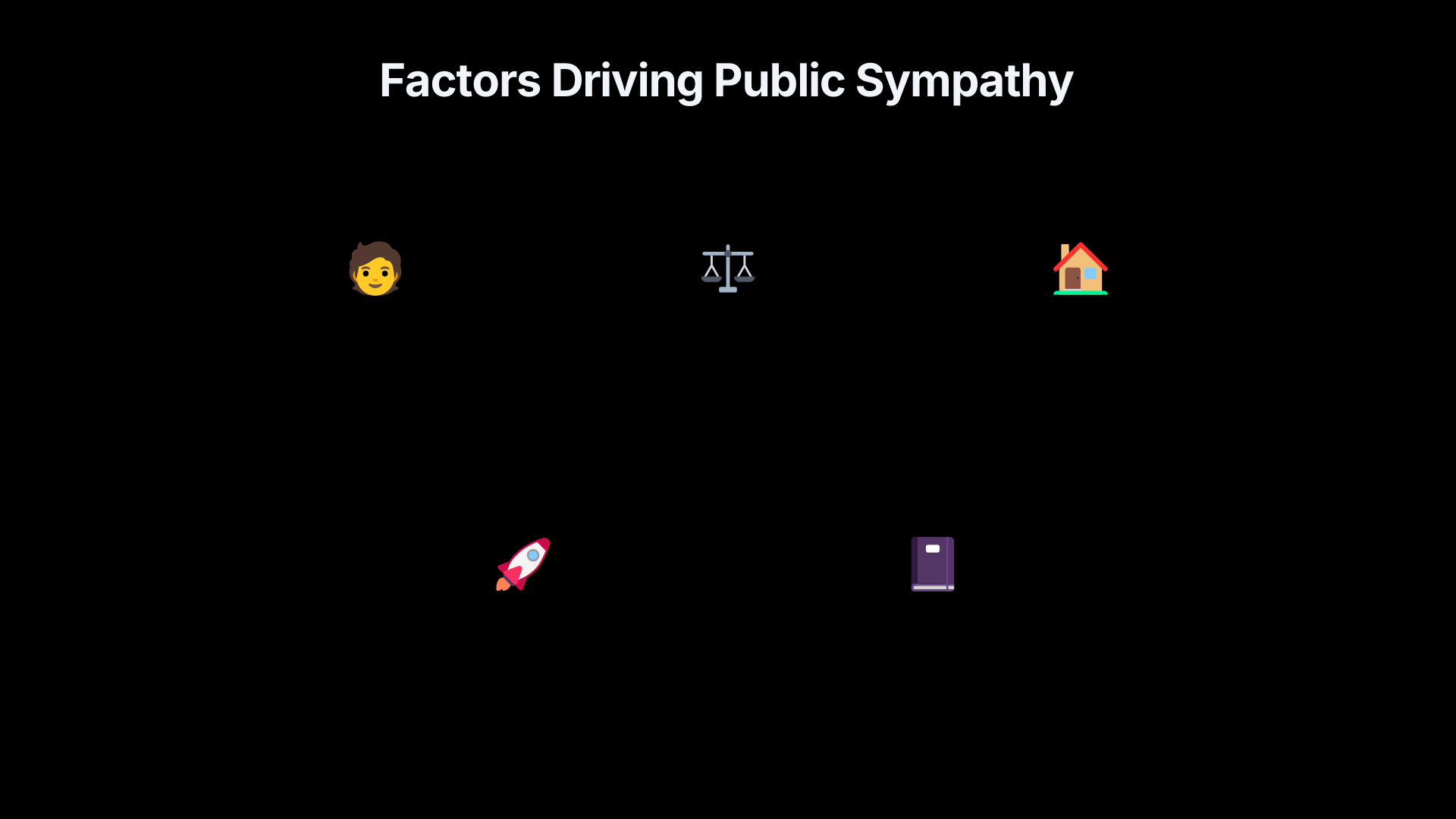
Public sympathy was not generated solely by the UFO angle. In fact, the article’s emotional force came largely from the contrast between McKinnon’s apparent ordinariness and the scale of the legal threat he faced. Ronson emphasised that extradition could expose him to decades of imprisonment in the United States, creating a David-versus-Goliath dynamic that many readers found compelling.[The Guardian]theguardian.comThe Guardian Game over | Gary Mc KinnonThe GuardianGame over | Gary McKinnonJuly 9, 2005 — 9 Jul 2005 — Gary McKinnon has been accused of committing the 'biggest military compu…
Several features of the profile reinforced that response:
- The individual versus institutions: McKinnon appeared as a lone figure confronting the US justice system.
- Questions of proportionality: Readers were invited to consider whether the potential punishment matched the conduct alleged.
- Personal vulnerability: The profile focused on the emotional and practical consequences of extradition rather than treating the case as a purely technical security issue.
- Unusual motivation: The UFO search made the story memorable and distinguished it from ordinary hacking cases.[The Guardian]theguardian.comThe Guardian Game over | Gary Mc KinnonThe GuardianGame over | Gary McKinnonJuly 9, 2005 — 9 Jul 2005 — Gary McKinnon has been accused of committing the 'biggest military compu…
The cumulative effect was to encourage readers to think about consequences and fairness, not merely legality.
Influence on Later Coverage
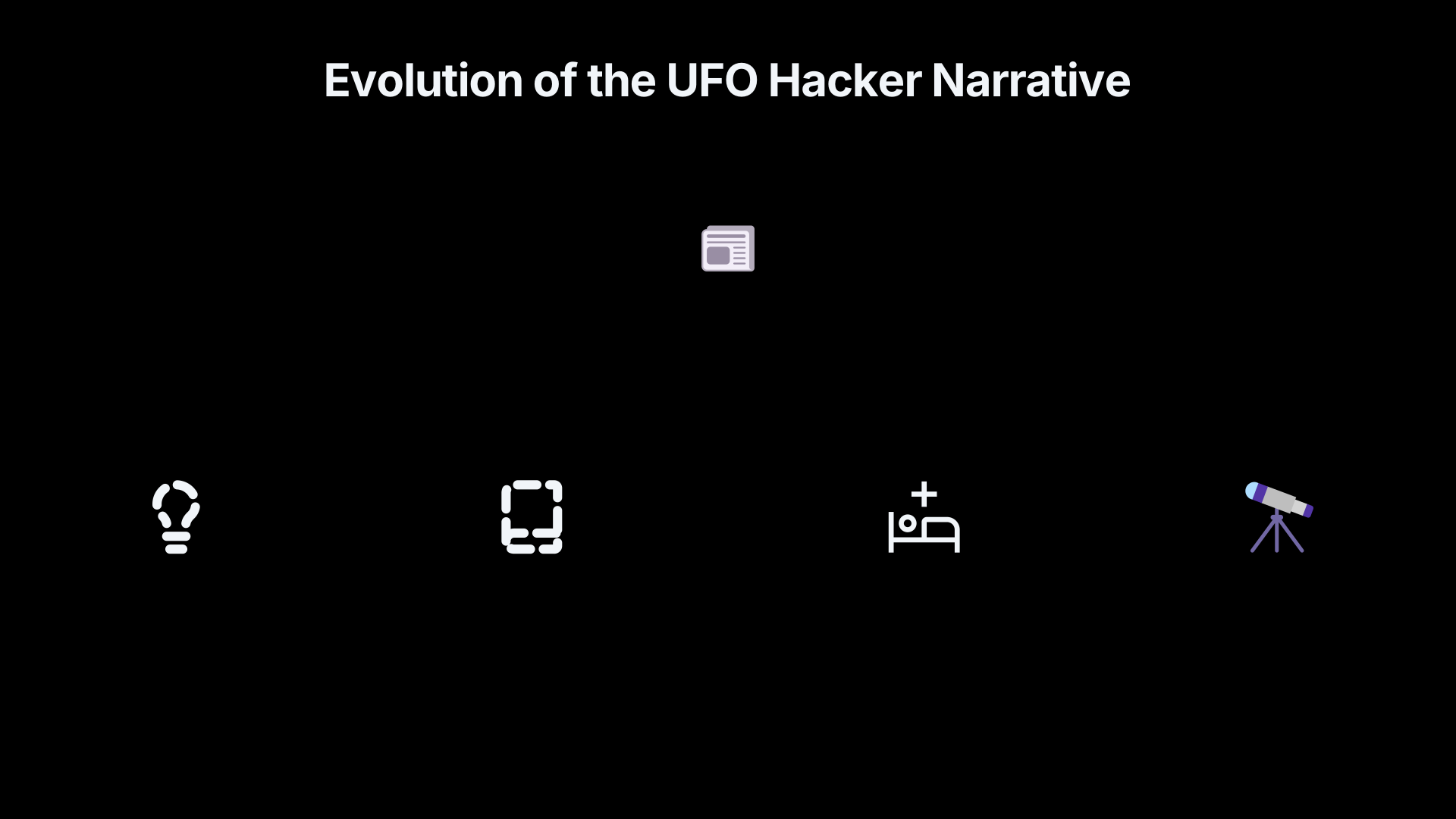
The Guardian profile established many of the themes that later journalists, campaigners and commentators would revisit. Subsequent reporting often returned to the image of McKinnon as an unconventional individual facing extraordinary legal pressure rather than concentrating exclusively on the alleged intrusions themselves.[The Guardian]theguardian.comThe Guardian Game over | Gary Mc KinnonThe GuardianGame over | Gary McKinnonJuly 9, 2005 — 9 Jul 2005 — Gary McKinnon has been accused of committing the 'biggest military compu…
As the extradition dispute continued for years, public campaigns increasingly relied on personal narratives. Arguments about mental health, vulnerability and the human impact of extradition gained prominence in coverage. While those later developments involved evidence and issues beyond Ronson’s article, the profile had already created a framework through which many readers understood the case: a story about a person, not just a cybercrime file.[Wikipedia]WikipediaGary Mc KinnonGary Mc Kinnon
The article also influenced how the “UFO hacker” label evolved. Rather than depicting McKinnon solely as someone accused of unauthorised access to government computers, it connected the hacking allegations to a broader narrative of curiosity, belief and the search for hidden information. That framing proved highly durable and was repeated across later discussions of the case.[The Guardian]theguardian.comThe Guardian Game over | Gary Mc KinnonThe GuardianGame over | Gary McKinnonJuly 9, 2005 — 9 Jul 2005 — Gary McKinnon has been accused of committing the 'biggest military compu…
A Lasting Shift in Public Perception
Ronson’s profile did not determine the outcome of the McKinnon case, nor did it resolve questions about the seriousness of the alleged hacking. Its significance lies elsewhere. By presenting McKinnon as a complex individual with unusual motivations and visible vulnerabilities, the article altered the terms of public discussion. Readers were encouraged to see not only the allegations but also the person behind them.[The Guardian]theguardian.comThe Guardian Game over | Gary Mc KinnonThe GuardianGame over | Gary McKinnonJuly 9, 2005 — 9 Jul 2005 — Gary McKinnon has been accused of committing the 'biggest military compu…
In the broader history of media coverage surrounding the “UFO hacker” story, that human-interest framing became one of the most powerful forces shaping public sympathy. Long before the legal battle reached its conclusion, many people had already encountered McKinnon through Ronson’s portrait of an ordinary man caught in an extraordinary confrontation.[The Guardian]theguardian.comThe Guardian Game over | Gary Mc KinnonThe GuardianGame over | Gary McKinnonJuly 9, 2005 — 9 Jul 2005 — Gary McKinnon has been accused of committing the 'biggest military compu…
Amazon book picks
Further Reading
Books and field guides related to How a Newspaper Profile Changed Public Perception. Use these as the next step if you want deeper reading beyond the article.
eBay marketplace picks
Marketplace Samples
Example marketplace items related to this page. Use the search link to explore similar finds on eBay.



Endnotes
1.
Source: Wikipedia
Title: Jon Ronson
Link:https://en.wikipedia.org/wiki/Jon_Ronson
2.
Source: reason.com
Title: surreal interview of the month
Link:https://reason.com/2005/07/19/surreal-interview-of-the-month/
Source snippet
19 Jul 2005 — In The Guardian, Jon Ronson chats with the British hacker Gary McKinnon, who's facing extradition to the U.S. and up to 70...
3.
Source: Wikipedia
Title: Gary [Mc Kinnon]({{ ‘mc-kinnon/’ | relative_url }})
Link:https://en.wikipedia.org/wiki/Gary_McKinnon
4.
Source: theguardian.com
Title: The Guardian Game over | Gary Mc Kinnon
Link:https://www.theguardian.com/theguardian/2005/jul/09/weekend7.weekend2
Source snippet
The GuardianGame over | Gary McKinnonJuly 9, 2005 — 9 Jul 2005 — Gary McKinnon has been accused of committing the 'biggest military compu...
Published: July 9, 2005
5.
Source: tarrdaniel.com
Link:https://www.tarrdaniel.com/documents/Ufology/gary_mckinnon_case.html
Source snippet
UFO - Ufology - The Gary McKinnon CaseIn 2001, a British man named Gary McKinnon allegedly carried out the 'biggest military computer hac...
Additional References
6.
Source: reddit.com
Link:https://www.reddit.com/r/hacking/comments/1etqs6b/how_gary_mckinnon_did_what_he_did/
7.
Source: cybereason.com
Link:https://www.cybereason.com/blog/malicious-life-podcast-the-u.s-vs.-gary-mckinnon
Source snippet
Malicious Life Podcast: The U.S. vs. Gary McKinnonGary McKinnon, a British hacker with Asperger's, broke into NASA and US Army networks t...
8.
Source: nziff.co.nz
Link:https://www.nziff.co.nz/assets/sm/upload/su/cy/ry/lz/NZIFF15_THP_210715-1.pdf
Source snippet
VISIT US AT NZIFF.CO.NZThat said, programming NZIFF is more than ever about celebrating the public occasion of movie-going, privileging t...
9.
Source: spectrum.ieee.org
Link:https://spectrum.ieee.org/the-autistic-hacker
Source snippet
McKinnon: The Autistic HackerGary McKinnon hacked thousands of government computers · A few months after the World Trade Center attacks...
10.
Source: dokumen.pub
Link:https://dokumen.pub/true-stories-of-space-exploration-conspiracies-1nbsped-9781477778340-9781477778333.html
Source snippet
Chapter 10 1. CAUS, Just... “Jon Ronson Meets Hacker Gary McKinnon.” Guardian, July 9, 2005. 236. True...Read more...
Published: July 9, 2005
11.
Source: imdb.com
Link:https://www.imdb.com/list/ls074437197/
Source snippet
Love Don't Cost a Thing - 2001: 1 week · 2. Get Right - 2005: 1 week · 3. On the Floor...Read more...
12.
Source: rgu-repository.worktribe.com
Title: hackers beware the cautionary story of gary mckinnon
Link:https://rgu-repository.worktribe.com/output/248043/hackers-beware-the-cautionary-story-of-gary-mckinnon
Source snippet
beware: the cautionary story of Gary McKinnon.This article describes and analyses the facts and law surrounding the extradition of McKinn...
13.
Source: educate-yourself.org
Link:https://educate-yourself.org/pnl/nerdwhosawtoomuch13jul05.shtml
Source snippet
The Nerd Who Saw Too Much (July 13, 2006)13 Jul 2005 — Guardian Unlimited | Weekend | Jon Ronson meets hacker Gary McKinnon...
Published: July 13, 2006
14.
Source: corpus-stats.lancs.ac.uk
Title: BNC frequency list.txt
Link:https://corpus-stats.lancs.ac.uk/data/BNC_frequency_list.txt
Source snippet
lancs.ac.uktxt... july 11842 872 response 11840 873 choice 11837 874 charge 11829 875 wide 11815 876 pressure... ordinary 6787 1544 prev...
15.
Source: thetimes.com
Link:https://www.thetimes.com/best-law-firms/profile-legal/article/so-sad-so-frightening-the-story-behind-hacker-gary-mckinnon-kclcktl9lh5
Source snippet
So sad, so frightening: the story behind hacker Gary...26 Sept 2013 — It was while researching UFOs on the internet in 2001 that McKinno...
Topic Tree